We use cookies to enhance your journey. Privacy Policy
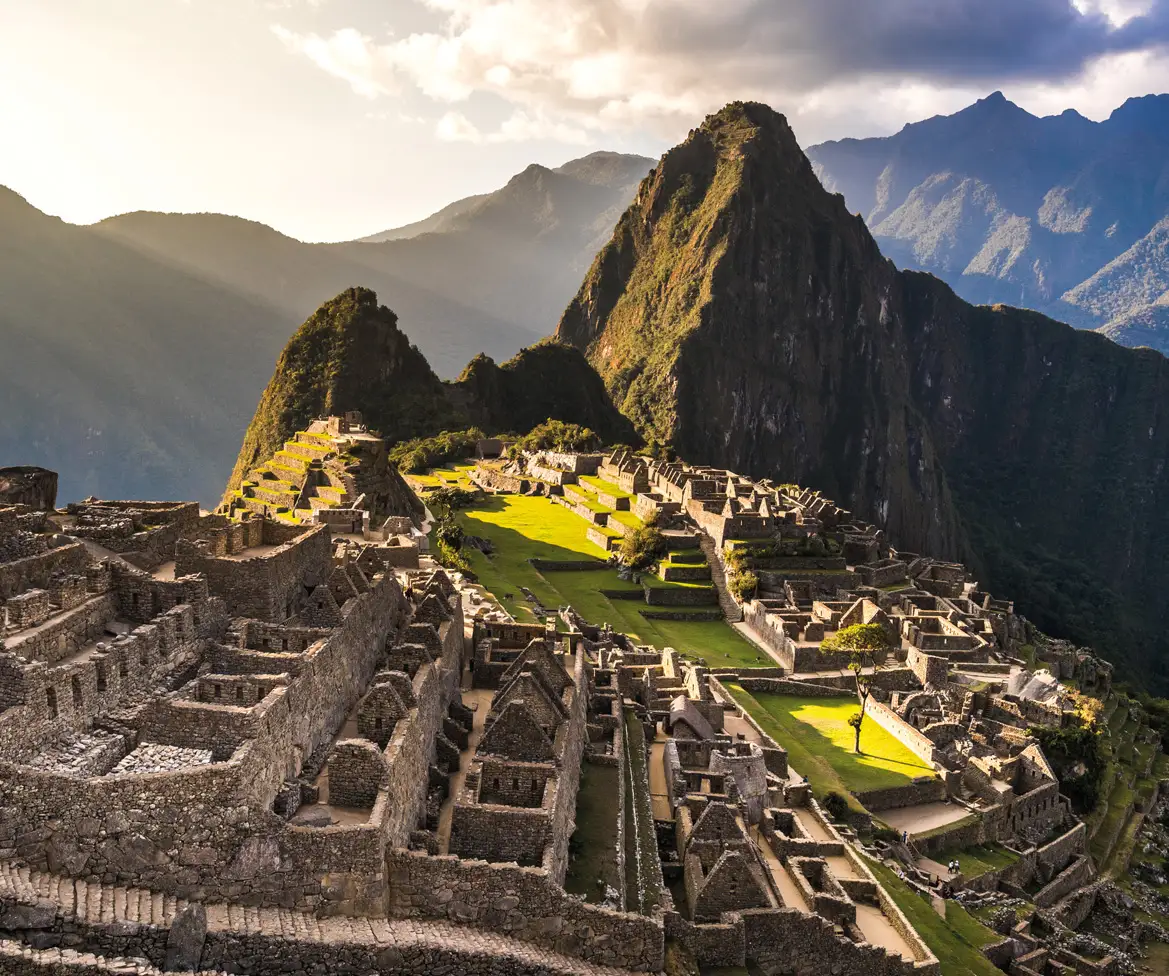
Machu Picchu at sunrise. The Sacred Valley. Lima's world-class food scene. Eight of the world's ten highest peaks within one country — and the most complete ancient civilisation still visible on earth.
Three countries in one. The Andes hold the Inca Empire's skeleton — still standing, still extraordinary. Lima is South America's most underrated food city. And the Amazon covers 60% of the country, almost completely untouched. Most people come for Machu Picchu and leave having seen a fraction of what Peru actually is.
Clear skies across the Andes. The Inca Trail is open. Machu Picchu views are guaranteed. Nights are cold at altitude — bring layers. June and July are peak season; book Inca Trail permits months ahead.
Transitional months — some rain, some sun. Machu Picchu is dramatically lush and misty in these months which is a different but genuinely beautiful experience. Fewer crowds, lower prices.
The Inca Trail closes in February for maintenance. Heavy rain in the Andes and Amazon. Lima's coast is actually driest and warmest. If you're doing Lima + Nazca + Huacachina, this is fine.
The Festival of the Sun — a massive Inca celebration in Cusco's Sacsayhuamán fortress. One of the most extraordinary cultural events in South America. Book accommodation in Cusco 6+ months ahead.
The non-negotiables, the hidden gems and the ones most first-timers miss.
The 5:30am bus gets you in before the crowds — take it.
The most dramatic arrival at any archaeological site on earth.
Pisac, Ollantaytambo, Moray — the part of Peru most visitors rush past on the way to Machu Picchu.
Surquillo Market for the real thing, or Central if you're splashing out — both are worth the trip alone.
Mineral-striped rock at 5,200m — genuinely unlike anything else, if you're properly acclimatised.
The floating Uros reed islands and the world's highest navigable lake — best seen overnight, not as a rushed day trip.
An oasis in the desert surrounded by 100m sand dunes — one of Peru's most unexpected and brilliant experiences.
Pink dolphins, macaw clay licks and caimans — 45 minutes by plane from Cusco, a world away.
Detailed city guides — the Cusco and Lima guides are the most developed. More being added as I travel.
The former Inca capital and the base for Machu Picchu, the Sacred Valley and the Inca Trail. Allow at least 3–4 nights — 2 to acclimatise, 2 to actually explore.
South America's best food city. Miraflores cliff walks, Barranco's colonial streets, the Larco Museum and the ceviche that justifies the flight alone.
Pisac, Ollantaytambo, Moray and the Maras salt pans — the most underrated part of the Inca circuit. Most visitors rush through it on the way to Machu Picchu.
Peru's second city — white volcanic stone colonial architecture, the Santa Catalina Monastery and the Colca Canyon where condors soar 4,000m above the valley floor.
The floating Uros reed islands and the gateway to Isla del Sol in Bolivia. Often rushed — worth an overnight to see the lake properly at dawn and dusk.
The largest city in the world with no road connection — accessible only by river or plane. The gateway to Pacaya-Samiria, the most biodiverse protected area in Peru.
Hostels, overnight buses, budget food and how to do the Inca Trail without the premium operator markup.